

.png)

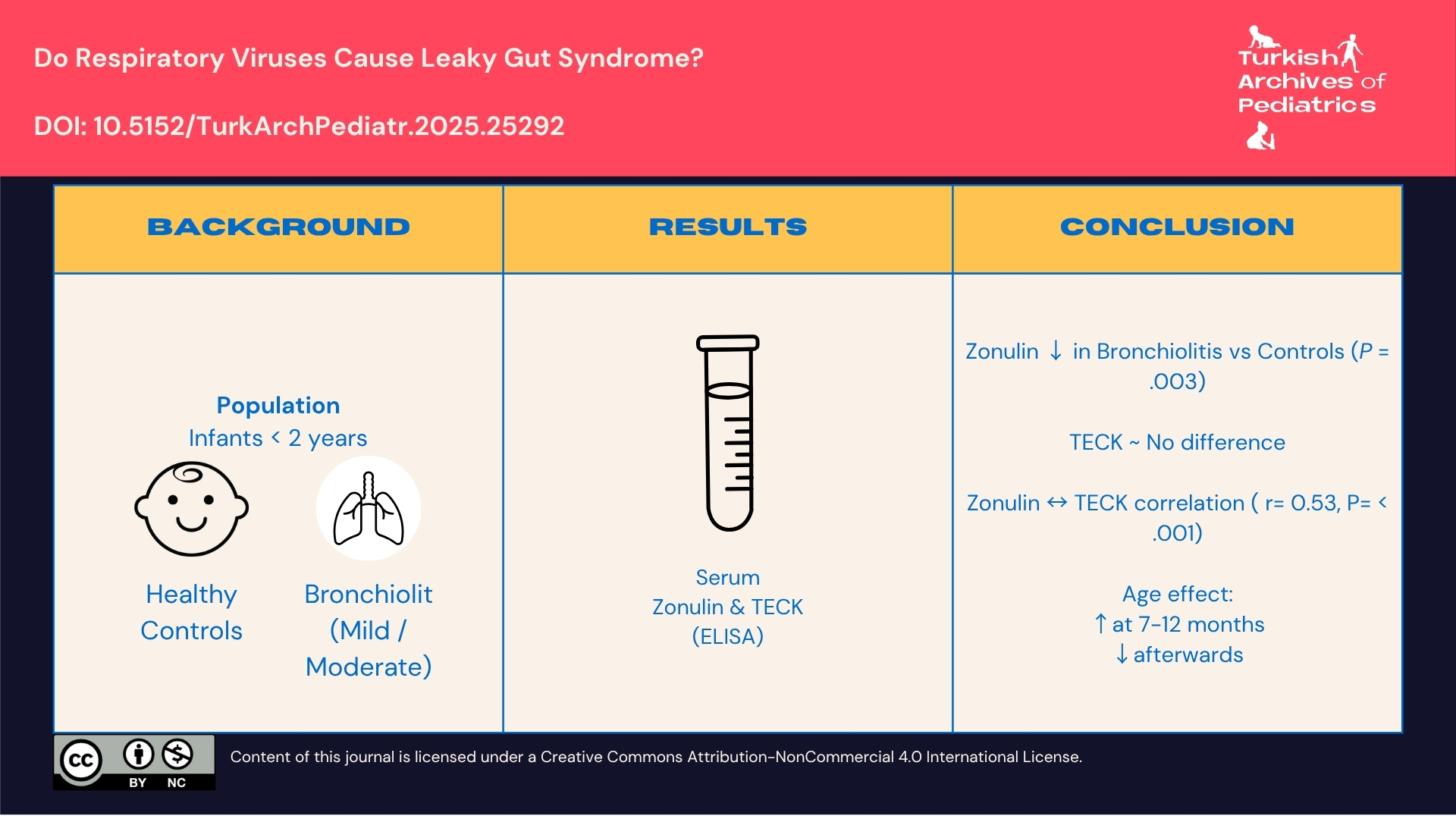
Objective: Increased intestinal permeability is associated with the development of allergic and autoinflammatory diseases. Zonulin is a key physiological regulator of tight junctions in the intestinal epithelium. Thymus-expressed chemokine (TECK), primarily expressed in the intes tine, is involved in mucosal immunity. This study aimed to investigate whether respiratory viral infections contribute to leaky gut syndrome and to assess the role of TECK in this process.
Materials and Methods: Infants aged 1-24 months who were hospitalized for acute bronchiol itis were enrolled. Healthy children under 2 years of age served as controls. The patient group was further categorized into mild and moderate-to-severe subgroups using the Modified Tal Score. Serum zonulin and TECK levels were measured using enzyme-linked immunosorbent assay.
Results: A total of 116 participants were included in the analysis (78 patients, 38 controls). Zonulin levels were significantly lower in the patient group compared to the control group. No statisti cally significant difference was found in TECK levels between the groups. Zonulin and TECK levels showed a moderately strong positive correlation (correlation coefficient = 0.53; P < .001). Zonulin levels were lowest in the first 6 months of life, peaked during the second 6 months, and declined thereafter (P < .001). Thymus-expressed chemokine levels followed a similar trend.
Conclusion: Serum zonulin and TECK levels did not increase in infants with bronchiolitis due to respiratory viral infections. Both biomarkers peaked during the second half of the first year of life, and a strong positive correlation was observed between them.
Cite this article as: Karataş ŞN, Çağan E, Demirören K, Budak F, Bozkurt T. Do respiratory viruses cause leaky gut syndrome? Turk Arch Pediatr. Published online December 29, 2025. doi:10.5152/ TurkArchPediatr.2025.25292.